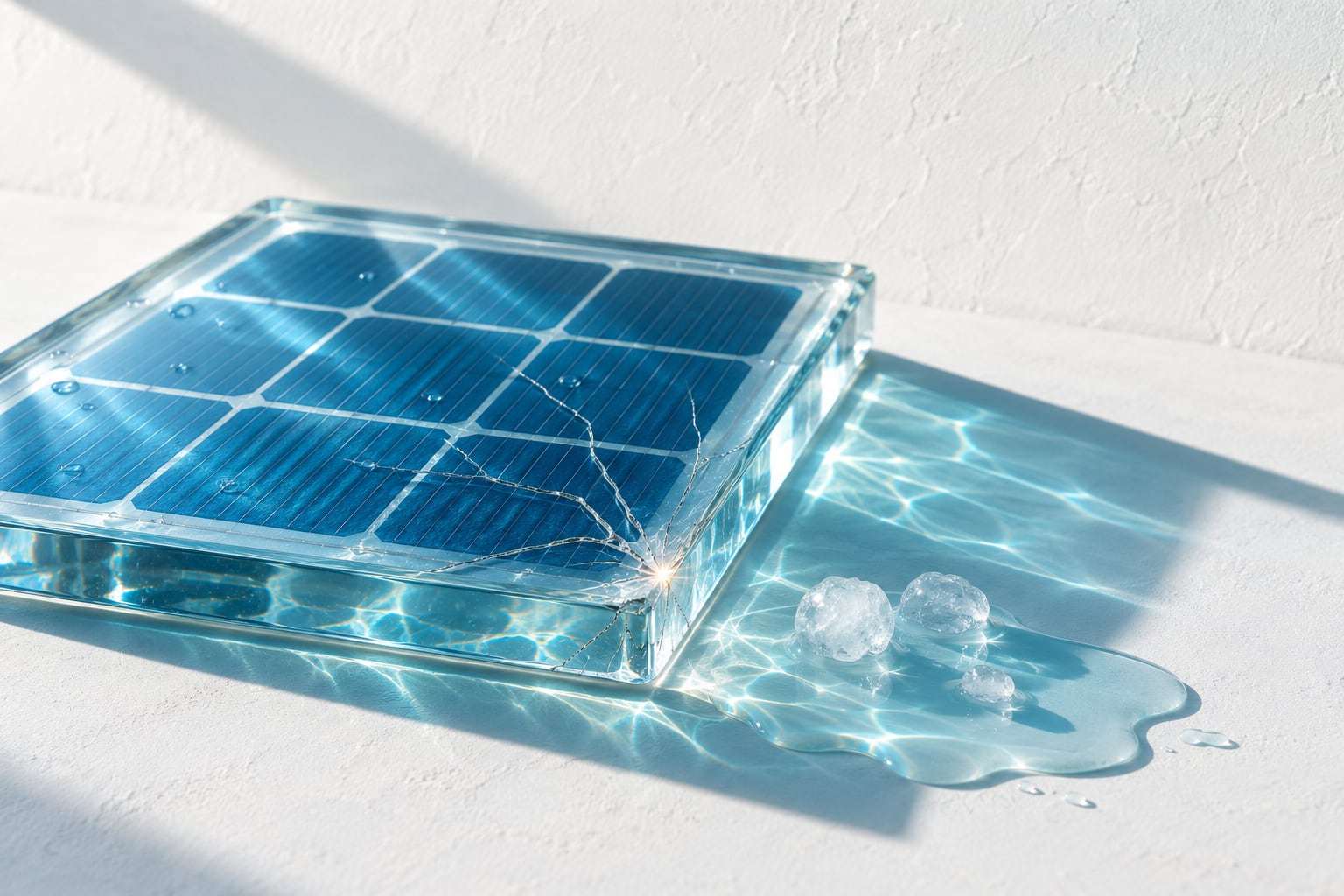
After hail, the most useful things you can do happen on the ground: look, photograph, and check your app. The roof can wait for the right person.
What should you do first?
Wait. Let the storm pass completely, including the lightning that often trails a Front Range hail cell. Then walk outside before you do anything else.
Do not climb onto the roof. Wet shingles, broken glass and hailstones underfoot are a bad combination, and a cracked panel is still connected to live wiring. Nothing you can do up there is worth the risk.
Our after a hailstorm checklist is the short version of this article. It fits on a phone screen and you can work through it from the yard.
What can you see from the ground?
More than you might think, especially with binoculars on a bright morning. Walk all the way around the house and look at each part of the array from a few angles.
- A white, crazed web in the glass: shattered tempered glass, usually across a whole panel.
- A cracked corner or edge: often where a hailstone struck near the frame.
- Bent or dented frames: most visible along the top edge of the top row.
- Debris on the glass: shredded leaves, twigs and ice packed along the frames.
- A panel out of line: one sitting higher or lower than its neighbors.
- Hanging cables: anything dangling below the array edge.
Tempered panel glass does not crack like a window. When it fails, it usually breaks into a fine pattern of small pieces that stay in place, so the panel looks frosted rather than holed.
Do all hail cracks show?
No, and it is worth being honest about that. Hail can crack the solar cells under the glass without breaking the glass itself. Those cracks are invisible from the ground and often from the roof.
They can show up later as a panel that slowly falls behind its neighbors. Finding them for certain takes specialist testing that your installer or insurer can arrange.
Our inspections are visual only. We look at every module and photograph it, and we tell you what we see. We do not do electrical testing or imaging of the cells, and we will not suggest a panel is fine just because the glass is whole.
What should you photograph?
Everything, the same day if you can. Photos taken soon after a storm are the most useful record you will have.
- The hail itself: a few stones next to a coin or a ruler, before they melt.
- The date and time: your phone records this, but note it anyway.
- The array from each side: wide shots first, then close-ups through binoculars or zoom.
- The roof around the panels: dents in vents and flashing, bruised shingles.
- Gutters and downspouts: dents, and a pile of shingle granules at the bottom.
- Siding, windows, cars and fences: other damage helps show the size of the storm.
Keep the originals. Insurers and installers may ask for them, and a clear set saves everyone a second visit.
What does your app say?
Open it the next clear day. Compare a clear day before the storm with a clear day after it, as close together in the calendar as you can.
- No change: a good sign, though it does not rule out hidden cell cracks.
- The whole array lower: debris, a fault, or damage across many panels.
- One panel or row lower: look at that spot from the ground for cracks or debris.
- A panel at zero: possible damage or a tripped unit. Call your installer.
If you have microinverters or optimizers, the panel view makes this much easier. Our guide on how to read panel-level data shows what to look for, and your solar production dropped works through other causes.
Who handles what after hail?
Each kind of damage has an owner. Getting the right person on it first saves time and money.
- Your insurer: call before repairs if you may claim. They will tell you what they need.
- A roofer: shingles, flashing, vents and gutters. The roof under the array matters too.
- Your installer: cracked panels, wiring, inverters, and removing panels for roof work.
- A licensed electrician: anything electrical your installer cannot reach.
- Us: a photo record of every module from the glass side, and plain notes.
We do not give insurance or roofing advice, and we do not repair or replace panels. What we can do is document what is there so the people who do those jobs start with a clear picture.
What is a storm check?
A visit built for the week after hail. Our storm check is from $119 and covers:
- A walk-around: photos of every row from the ground and the roof edge.
- A glass-level look: each module checked for cracks, chips, bent frames and debris.
- Your numbers: a clear-day comparison from your app, before and after the storm.
- A short report: what we saw, with photos, and who should look at each item.
If the report is clean, you have a dated record that says so. If it is not, you have photos your installer, roofer and insurer can all use. The visual solar inspection page describes the method in full.
Should you wash panels after hail?
Not until someone has looked at them. Hail storms leave the glass covered in shredded leaves and grit, and it is tempting to hose it all off. Wait.
Water on a cracked panel is a bad idea, and a rinse can hide damage that was easy to see under debris. We never wash a panel with broken glass. We photograph it, note it, and leave it for the installer.
Once the array has been checked and any damaged panels dealt with, a wash is a fine way to clear the storm debris. Many owners combine the two, and the glass-level check is part of every panel cleaning visit anyway.
When is hail season here?
Mostly May to August, with the busiest stretch in early summer. Storms build over the foothills in the afternoon and roll east across Golden, Lakewood, Arvada and the rest of the metro, sometimes hitting one street hard and missing the next.
That patchiness is why neighbors’ experiences are a poor guide. A friend across town may have no damage while your block took the worst of it. The hail page covers what hail does to panels and what to watch for through the season.
What if you plan to sell?
Then the record matters even more. Buyers, their inspectors and their lenders tend to ask about the solar, and “there was a big hail storm two summers ago” is a question you want to answer with photos.
Keep your storm photos, any storm check report, and the paperwork from any repairs or claims together in one folder. When the time comes, our home sale solar report is from $199 and puts the condition of the array and its recent output into one document you can hand over, alongside your own records.
Is it worth checking if nothing looks broken?
Often, yes. A clean look from the ground does not rule out a cracked corner hidden by debris, or a frame dented on the far side of the roof. And a dated record is worth having if a problem shows up later or you sell the house.
If the app looks normal, the glass looks whole, and the storm was small, you may reasonably decide to wait. That is a sensible call, and nobody should rush you out of it.
Where to go from here
Start with the after a hailstorm checklist and your photos. If you want every module looked at and recorded, you can book a storm check, and we will send you plain notes on what we see and who should handle it.