Does wildfire smoke hurt solar output?
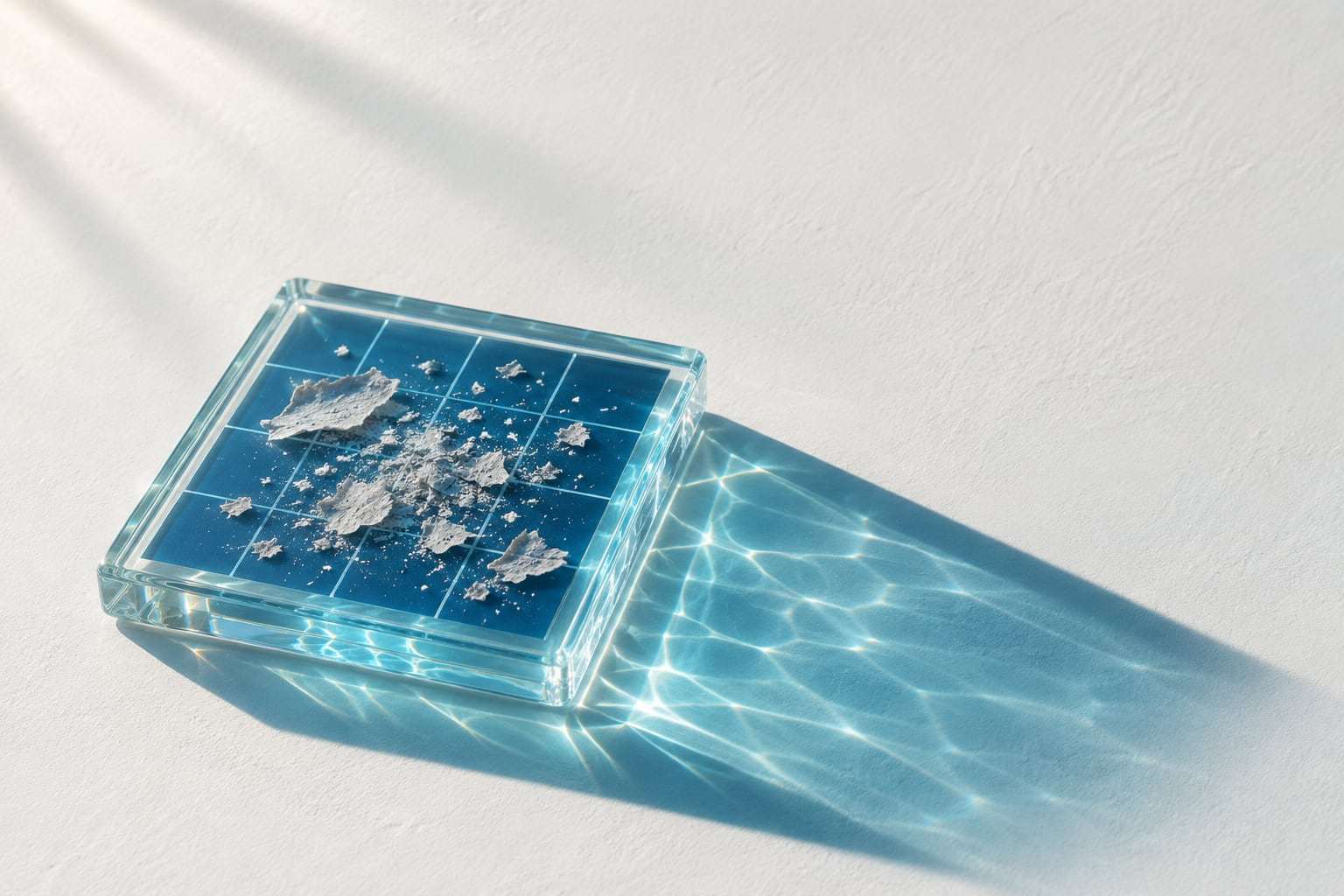
Less than it looks. A Colorado State University study found transported smoke cut solar resources by only about 5%, and in places less than 2%. The ash that settles on the glass is the part that lasts.
When does it land?
July to October
- Jan
- Feb
- Mar
- Apr
- May
- Jun
- Jul
- Aug
- Sep
- Oct
- Nov
- Dec
How do I spot ash?
Grey flakes
Fine grey or white flecks on the car, the deck and the patio furniture.
Output stays flat
Clear-day numbers that do not recover after the sky clears and the smoke moves on.
Streaky film
Grey streaks where a light shower ran through the ash and dried.
Dark bottom edge
Late-summer dust and ash together, caked along the lower frame.
What does it do to output?
Smoke dims the sun itself, and output comes back when the air clears. Colorado State University researchers found that losses near active fires are larger than the roughly 5% from transported smoke. Ash is different: it settles on the glass, scatters light and stays until a soaking rain or a rinse lifts it, on top of any summer dust.
What can I do myself?
Do
- Wait until the smoke clears and ash stops falling before washing anything.
- Compare clear days in your app before and after the smoky stretch.
- Rinse a ground mount with a gentle garden hose spray, early in the morning.
- Look with binoculars for grey streaks along the bottom edge.
Don’t
- Don’t wipe or brush ash dry; it drags grit across the glass.
- Don’t wash while ash is still falling; it will be back within days.
- Don’t use a pressure washer to blast it off.
- Don’t climb onto the roof in smoke and ash.
What does our crew do?
Wait for clear air
We book once smoke lifts and ash stops falling, so one wash holds.
Soak, then brush
Pure water wets the ash, so soft brushes move it without grinding.
Edges by hand
Ash and dust caked at the bottom frame get extra passes with microfiber.
Smoke days excluded
We compare clear days only, so a smoky week does not skew your before and after.
What do owners ask about wildfire smoke and ash?
How much does wildfire smoke reduce solar output?
Usually a little. A Colorado State University study in Nature Communications (January 2025) found transported wildfire smoke reduced solar resources by only about 5%, and in some places by less than 2%. Losses close to active fires are larger. Output returns once the air clears, unless ash is left on the glass.
Will rain wash ash off solar panels?
A soaking rain on tilted panels often moves most of it. A light shower tends to smear ash into streaks that dry in place, and a 2025 Solar Energy study found light rain under 1 mm a day increased dust buildup and adhesion on flat modules. If streaks show from the ground, a rinse helps.
Can I wash ash off with a hose?
Yes, on panels you can reach from the ground. Use a gentle spray early in the morning, no soap, and let the water carry the ash down rather than wiping it. Tap water can leave mineral spots as it dries. For rooftop arrays, book a crew rather than climbing.
When should I wash after fire season?
Once the smoke has cleared and ash has stopped falling, often in September or October. Washing in the middle of an active fire season only buys a few days. One late-season wash clears ash and summer dust together, from $149 for up to 20 panels.
Seeing this on your glass?
Send a photo from the ground or a screenshot of your app, and we will say whether it needs us.