Dust you only see up close
Dry months build a grey film your clear-day numbers reveal.
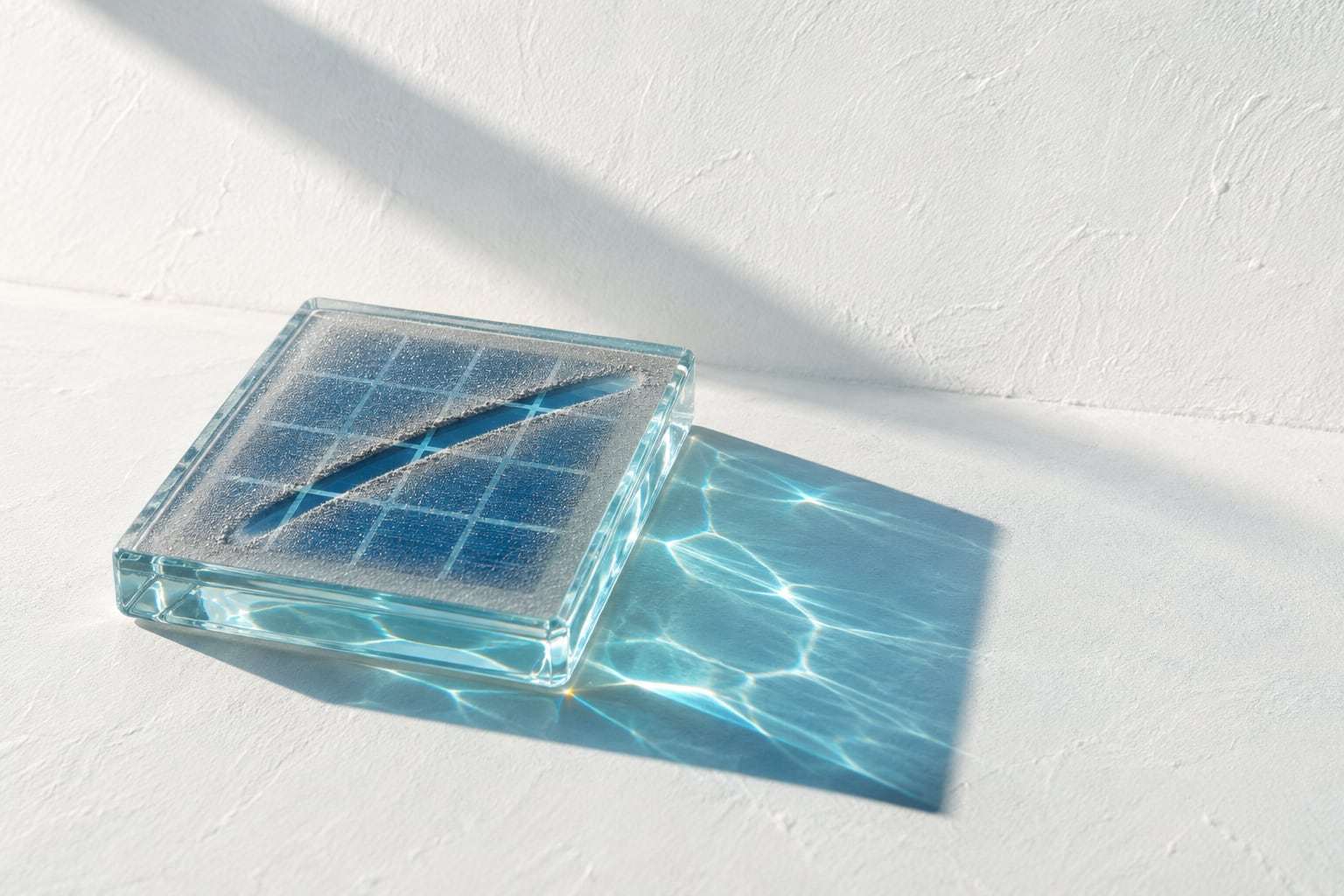
Is dust worth washing off panels?
Often by late summer, especially near roads, fields or building sites. If clear-day output has slid since spring and you can see a grey haze, a wash is likely worth it. If not, wait.
When does it land?
All year, worst July to October
- Jan
- Feb
- Mar
- Apr
- May
- Jun
- Jul
- Aug
- Sep
- Oct
- Nov
- Dec
How do I know it’s dust?
Grey bottom band
A darker strip along the lower frame, where rain carried dust down and left it.
Matte, not mirror
Panels look flat grey from the street instead of reflecting the sky.
A slow slide
Clear-day peaks in your app drifting lower from July into September.
Dust close by
A gravel lane, a farm field or new houses going up within a few blocks.
What does it do to output?
Dust scatters light before it reaches the cells. An NREL-led mapping study (Micheli and colleagues, 2019) reported soiling losses of up to 7% at U.S. sites. A thick band on the bottom edge can also shade the lowest cells, and shading one cell on a string can drag down more than its share.
What can I do myself?
Do
- Check your app on a clear day and compare it with a clear day a month earlier.
- Look along the bottom frame with binoculars for a grey band.
- Rinse a ground mount with a garden hose early in the morning, then let it drip dry.
- Wait for a real soaking rain before deciding; it may do the job.
Don’t
- Don’t climb a ladder onto a dusty, slick roof.
- Don’t use a pressure washer; it can strip coatings and force water into seals.
- Don’t dry-brush; dry dust scratches like fine sand.
- Don’t rinse hot glass in the midday sun.
What does our crew do?
Read the slide
We pull 30 days of your production first, so we can see the dust in numbers.
Soak, then brush
Pure water loosens the film before soft brushes move it, top row down.
Bottom edge by hand
Caked dust at the frame lip gets extra passes and a microfiber cloth.
Compare afterward
The next clear days set against your baseline, sent with the row photos.
What do owners ask about dust and road grime?
Does rain clean dusty solar panels?
A heavy rain helps on tilted panels; light rain can make it worse. A 2025 Solar Energy study (Alzahrani and colleagues) found that rain under 1 mm a day increased dust buildup and adhesion on flat modules at a desert test site. On the Front Range, a brief summer shower often leaves dust caked at the bottom edge.
How often should dusty panels be cleaned?
Once a year is enough for many roofs; twice for arrays near dirt roads, fields or construction. The best guide is your own app: if clear-day output keeps sliding through the dry months, a second wash is worth booking. If it holds steady, skip it.
Can I hose off dusty solar panels myself?
Yes, if you can reach them from the ground. Rinse a ground mount or a low array early in the morning with a gentle spray and no soap. Tap water can leave faint mineral spots as it dries, which is why we use pure water. Never climb onto a roof to do it.
Why is there dirt along the bottom of my panels?
Rain and dew run down the glass, carry dust with them, and drop it at the frame lip where the water pools and dries. That band thickens with every shower and can shade the bottom row of cells. Pure water and a soft brush lift it.
How much does a dusty panel wash cost?
A single wash starts from $149 for up to 20 panels, plus $5 for each panel over 20. Prices are indicative and confirmed from a photo of your roof. The two-season plan, from $259 a year, books a late-summer wash for the dusty months.
Seeing this on your glass?
Send a photo from the ground or a screenshot of your app, and we will say whether it needs us.