What the trees drop on glass
Fluff blows off, leaves pile up, and sap stays put.
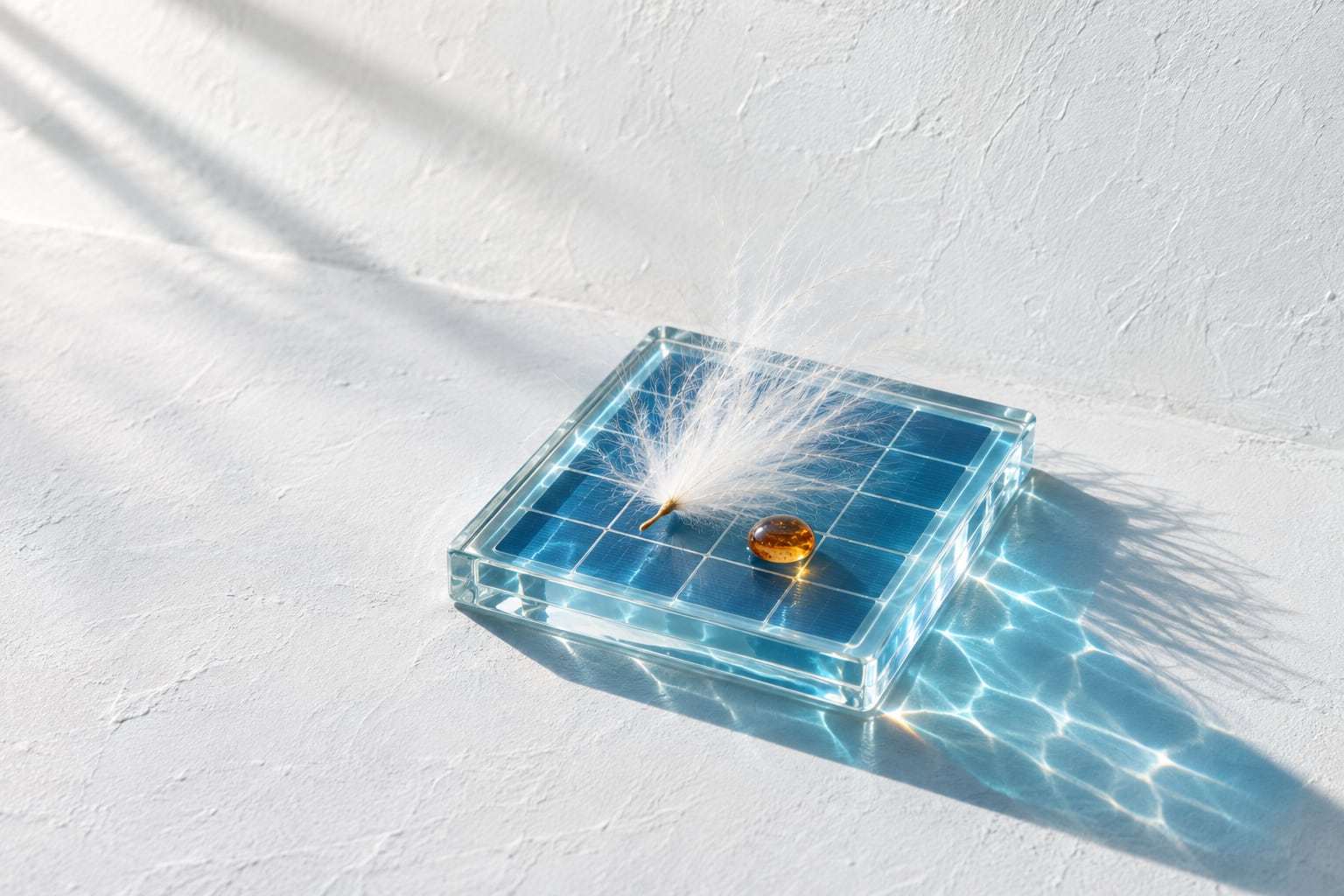
Do leaves and sap affect output?
Yes, where they sit. Loose fluff and dry leaves often blow off, but wet leaves, seed mats and sap spots block light on the cells beneath, and a few shaded cells can drag down a whole string.
When does it land?
May to October
- Jan
- Feb
- Mar
- Apr
- May
- Jun
- Jul
- Aug
- Sep
- Oct
- Nov
- Dec
What do I look for?
Mats at the bottom
Wet leaves and seed fluff packed along the lower frame and in panel gaps.
Sticky spots
Amber beads or a tacky sheen on panels under pines, maples or elms.
Needles in the gap
Pine needles caught between panels and roof, common on foothill homes.
Nearest row lagging
The row closest to the tree reading lower than the rest on clear days.
What does it do to output?
Leaves and sap shade patches rather than film the whole panel, so the loss lands on specific cells. Shading one cell on a string can drag down more than its share; microinverters limit it to that one panel. Debris packed under the array also holds moisture against the roof, which is worth a photo for your roofer.
What can I do myself?
Do
- Look with binoculars after a windy day for mats along the bottom edge.
- Have an arborist trim branches that hang over the array.
- Check panel-level data for the row closest to the tree.
- Rinse a ground mount early in the morning to float off loose fluff and leaves.
Don’t
- Don’t use goo remover, solvents or alcohol on sap.
- Don’t scrape sap with a blade or a fingernail.
- Don’t run a leaf blower from a ladder or the roof.
- Don’t pull debris from under the panels by hand.
What does our crew do?
Debris off the edge
Leaves, needles and fluff cleared from the glass and the frame edge we can reach.
Sap soaked off
Pure water and time soften the sap, then microfiber lifts it by hand.
Gaps photographed
Debris packed deep under the array is photographed and noted for the installer.
Timed to the trees
On the two-season plan, late June catches the fluff and September the summer sap.
What do owners ask about leaves, seeds and sap?
How do you get tree sap off solar panels?
With water and patience. We soak the sap with pure water until it softens, then lift it with microfiber by hand. No solvents, no blades, no scrubbing pads. Old, hardened sap can take several passes, and if a faint mark remains, we tell you rather than reach for a chemical.
Will rain clear leaves off my panels?
Dry leaves often blow or wash off tilted panels. Wet leaves and seed mats tend to stick along the bottom edge and in the gaps, where they hold moisture and shade the lowest cells. If you can still see a line of debris from the ground after rain, it is staying.
Is cottonwood fluff bad for solar panels?
It does no harm, but it collects. Cottonwood fluff in May and June catches on the frame edge and mats with pollen and dew into a film. A wash after the trees finish, usually late June, clears both in one visit instead of chasing it all spring.
Should I cut back trees near my solar panels?
Trimming branches that hang over the array cuts both shade and debris, and an arborist can do it without touching the panels. Shade from a whole tree is a bigger output question than the leaves it drops, and your installer can tell you what it costs on your roof.
Do pine needles cause problems under panels?
They can collect in the gap between panels and roof, especially on foothill homes around Evergreen. Packed needles hold moisture against the roof and the wiring. We clear what we can reach from the edge, photograph the rest, and point you to your installer or roofer for anything that needs panels lifted.
Seeing this on your glass?
Send a photo from the ground or a screenshot of your app, and we will say whether it needs us.